

Silicon Valley saw a huge fall with the Theranos scandal. The company aimed to change healthcare with new blood testing technology.
Elizabeth Holmes started the company. It said its small devices could do many tests with just a little blood. This idea got lots of money and media interest.
But, the truth was different. The main technology didn’t work as claimed, even after years of trying.
The Elizabeth Holmes fraud case showed a big lie. The company used normal machines for tests, not their own tech. This risked patients’ health and tricked investors.
This story looks into if the blood testing system worked. It also tells how the big lie was exposed, leading to legal trouble and the company’s end.
The Rise of Theranos and Elizabeth Holmes’ Vision
In 2003, a silicon valley startup was born from a Stanford dropout’s dream. Elizabeth Holmes, 19, used her trust fund to start a company that would shake up healthcare.
The company, first called “Real-Time Cures,” was a big change from usual medical tests. Holmes wanted to change how we get health checks.
Founding Principles and Revolutionary Claims
The theranos founding aimed to make blood tests easy, cheap, and almost painless. Holmes dreamed of a world where health checks were simple fingerstick tests, not painful needle pricks.
Related Posts:
- What Is Pagaya Technologies AI-Powered Finance Explained

- Interesting Facts About Technology Surprising Tech Truths

- How to Reduce Technology Dependence A Guide to…

- What Is DeFi Technologies Decentralized Finance Investments

- What Is Information Management and Technology Data…

- How Technology Has Changed Parenting The Digital…

She promised to shake up the whole diagnostic world. Her tech could do hundreds of tests from just a few drops of blood, fast and cheap.
Her big elizabeth holmes vision excited many in healthcare. It seemed she could make health info more accessible with her new way.
Silicon Valley’s Darling: Funding and Media Hype
Theranos quickly won over investors, getting over $700 million. Its value soared to $9 billion at its highest.
Big names like the Walton family, Rupert Murdoch, and Betsy DeVos invested heavily. The media saw Holmes as the next Steve Jobs, often showing her in her signature black turtleneck.
The media frenzy was huge, with many stories and profiles. Holmes’ story of changing healthcare seemed unstoppable.
This mix of media love and investor trust made Theranos a Silicon Valley legend. But did the truth live up to the hype?
Understanding the Edison Technology: How It Was Supposed to Work
Theranos aimed to change blood testing with new tech that sounded like science fiction. They focused on two main things: a special blood collection system and a device that could automatically test these small samples.
The Microfluidics Promise: Miniaturising Blood Testing
Theranos’ dream was based on microfluidics, the science of working with tiny amounts of fluid. They wanted to make big lab tests small and automated.
The theranos microfluidics tech was meant to do over 200 tests from just a few drops of blood. This was a huge cut down from the many vials needed before.
Elizabeth Holmes often talked about Thomas Edison’s saying: “I have not failed. I’ve just found 10,000 ways that won’t work.” This idea drove their quest for smaller diagnostic tools.
Patented Technologies and Proprietary Methods
Theranos created several patented technologies to back their bold claims. They got many patents for their unique blood analysis methods.
Their nanotainer technology was a big change from old blood collection methods. These tiny containers could hold about 1/100th of the usual blood amount.
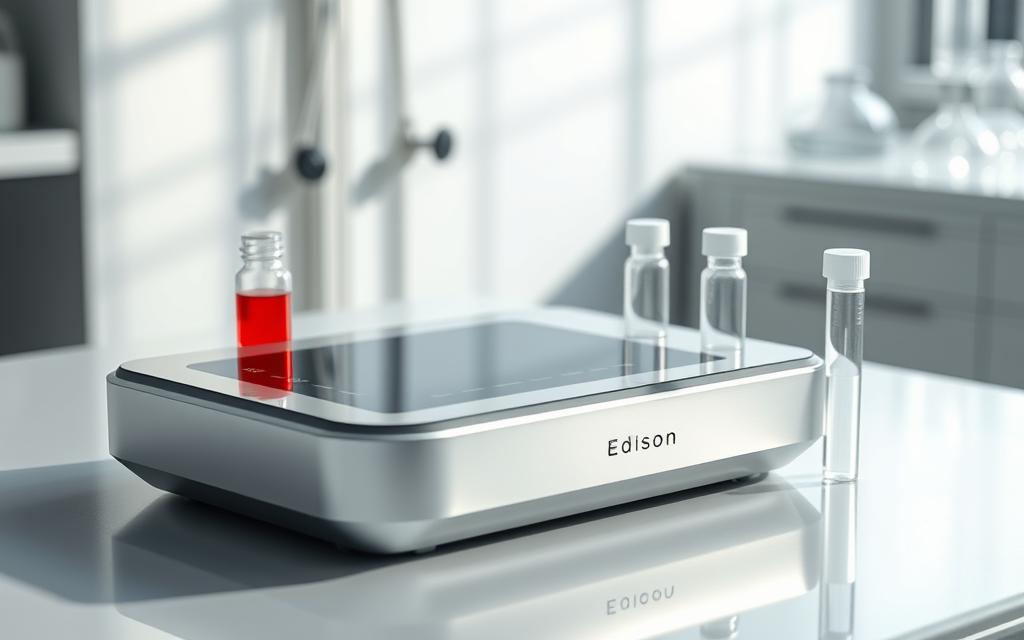
The edison blood testing device was meant to make testing easy. It was a small machine that could handle the nanotainers and do many tests at once.
| Technology Component | Claimed Function | Traditional Equivalent |
|---|---|---|
| Nanotainer | Micro-blood collection | Standard blood vials |
| Edison Device | Automated analysis | Laboratory equipment |
| Microfluidics | Sample processing | Manual handling |
| Proprietary Software | Result interpretation | Technician analysis |
Theranos kept their tech secrets tight. This secrecy made it hard to check their claims but added to their mystery.
The company’s collection of patents grew a lot while it was active. These patents covered all sorts of things, from how to handle blood to how to analyze data.
The Core Question: Does Theranos Technology Actually Work?
Behind the buzz and big promises, the real question was if Theranos’ blood testing tech worked well. This deep dive shows the truth behind their big claims.
Scientific Evaluation of Their Testing Methods
From the start, scientists were very sceptical about Theranos. Their methods didn’t get the usual scientific peer review in top medical journals.
Professor Eleftherios Diamandis from the University of Toronto did one of the few real checks. He said, “Most of the company’s claims are exaggerated.” This showed a big gap between what Theranos said and what science found.
The Edison device’s tiny technology was closely looked at. Experts wondered if it could be precise enough for tests. Big machines use more sample because they need to be sure of their results.
Independent Verification Attempts and Results
Many places tried to check Theranos’ tech on their own. The Cleveland Clinic was set to do a big study, but it stopped because of doubts about Theranos.
A 2016 study in the Journal of Clinical Investigation found big problems. Theranos’ tests were off more often than usual tests. This made people question blood test accuracy.
The table below shows the main differences between what Theranos said and what was really found:
| Aspect | Theranos Claims | Independent Findings |
|---|---|---|
| Test Accuracy | Comparable to traditional methods | Higher rate of abnormal results |
| Sample Volume | Few drops from fingerstick | Often required venous draws |
| Technology Validation | Proprietary validation complete | No peer-reviewed studies published |
| Test Range | 200+ tests available | Limited menu actually deployed |
Every check showed Theranos’ tech didn’t meet basic standards of theranos technology validation. The company’s refusal to let science check it was a big sign. Good medical tech welcomes science, not hides from it.
Early Warning Signs and Internal Concerns
Behind Theranos’ shiny image, a dark truth hid. Many employees spoke up about internal technical issues that could harm patients and the company’s reputation. They did this before outsiders started looking into it.

Whistleblower Accounts and Employee Testimonies
Tyler Shultz and Erika Cheung were key whistleblowers at Theranos. They risked their jobs to reveal the truth. Both worked in labs and found big problems with the Edison device’s results.
Shultz found out that the company was fiddling with data to hide bad results. His emails showed how the company valued looks over truth. This made it risky to speak up.
Cheung saw huge differences in test results between old methods and Theranos’s tech. She worried about patient safety but faced intimidation instead of help.
“I saw test results that could have led to misdiagnoses and harmful treatments. When I raised these issues, I was told to stay in my lane.”
Many staff members felt pressured and threatened for questioning the device’s reliability. The company’s leaders made it clear that honesty was not valued, but following orders was.
Technical Limitations Identified by Engineers
Engineers at Theranos found major problems with the Edison system. These internal technical issues included:
- Inconsistent sample handling causing result variations
- Calibration problems across different devices
- Software algorithms that manipulated outlier data
- Temperature sensitivity affecting chemical reactions
Technical staff found that the devices failed basic tests that other medical gear passed easily. They knew the tech couldn’t live up to its promises.
Despite knowing about these employee concerns, the company pushed on. They used unreliable tests and hid error rates from partners and regulators.
The ignoring of these warnings was disastrous. The theranos whistleblowers who tried to stop harm were silenced instead of celebrated. This shows how toxic the company’s culture was.
Partnerships and Commercial Deployment
Theranos aimed to prove its technology by teaming up with big names. These partnerships were key to growing the company. They brought new medical tech to people through big stores and government.
Walgreens Collaboration and Patient Testing
The Theranos Walgreens partnership was a big step. It made Theranos’ blood tests available to everyone. Starting in 2013, Walgreens set up Theranos Wellness Centres in over 40 spots in Arizona and California.
These centres let people get health info from just a few drops of blood. Walgreens thought this could change how we get health care.
Safeway also got on board, spending about $350 million. They updated their stores for Theranos testing. This showed a lot of faith in Theranos’ tech.
Theranos also made deals with Pennsylvania insurers and the Cleveland Clinic. These partnerships helped them get into the healthcare world, even without solid proof of their tech.
Military Contracts and Government Interest
Theranos went after military contracts to show its tech was good. Elizabeth Holmes said the US Department of Defence used Theranos in Afghanistan. She mentioned it was in medivac helicopters.
But these claims were later found to be false. This made people think the military backed Theranos. It brought in more money and partnerships.
Looking for defence contracts was part of Theranos’ big plan. It wanted to be seen as a key player in national security. This made people less likely to question its tech.
Despite doubts about its tech, Theranos kept growing. Its partnerships made it seem like it was doing well, even without solid proof.
Regulatory Scrutiny and Compliance Issues
The company’s big promises in healthcare hit a wall with strict American medical rules. Federal agencies started checking closely, finding big gaps between what Theranos said and what it did. These checks showed serious problems that put patients at risk.

FDA Investigations and Violation Notices
The Food and Drug Administration started looking into fda theranos investigation due to worries about their medical devices. They found many problems during their visits to Theranos. The FDA said the nanotainer was a Class II medical device, needing special approval.
Inspectors found Theranos used its Edison devices without the right tests. They also used unapproved devices for tests, breaking rules. This led to official warnings for Theranos to fix these issues right away.
Some major problems found by the FDA were:
- Untested blood collection containers
- Wrong way of classifying devices
- Not enough quality checks
- Not keeping the right records
CMS Sanctions and Laboratory Licence Revocation
The Centers for Medicare & Medicaid Services also checked Theranos’ lab work. They found big risks to patient health and safety. They were worried about tests for warfarin, which could affect treatment plans.
These cms violations were big problems with lab standards. The agency found many issues with quality and testing. They said Theranos didn’t meet important lab rules.
The consequences were:
- Theranos lost its CLIA certificate
- Sanctions stopped owners from running labs
- Big fines
- Had to fix all problems
These regulatory compliance issues stopped Theranos from testing patient samples. They lost their certifications. This was one of the toughest actions against a lab in a long time.
Regulators said they acted to keep patients safe. They found big problems, not just small mistakes. Their actions helped avoid bad test results for patients.
The Wall Street Journal Investigation
Theranos seemed revolutionary until a keen journalist started to uncover the truth. The Wall Street Journal’s investigation was key in exposing Elizabeth Holmes’ false claims.
John Carreyrou’s Groundbreaking Reporting
John Carreyrou, a Pulitzer Prize winner, started looking into Theranos in 2015. He was tipped off by pathologists and former employees. His work revealed the company’s real technology and deceit.
Carreyrou found out that Theranos used Siemens machines, not their own Edison devices, for most tests. This was a big lie compared to what they said publicly.

Tyler Shultz, a former employee and George Shultz’s grandson, was a key source. He risked a lot to share evidence of Theranos’ wrongdoings.
Documented Discrepancies and False Claims
The investigation showed big differences between what Theranos said and what they did. Carreyrou found documents showing Theranos gave wildly inaccurate results.
Theranos tried to silence the Wall Street Journal and its sources. They even tried to delete Wikipedia pages and watched people they thought might speak out.
| Public Claim | Investigation Finding | Impact |
|---|---|---|
| Edison devices handled all tests | Traditional machines used for >90% of tests | Technology misrepresentation |
| Fingerstick samples sufficient | Often required venipuncture retests | Patient inconvenience and extra costs |
| FDA-approved technology | Only one test approved from hundreds offered | Regulatory compliance issues |
| Military deployment | Limited implementation with poor results | Contract misrepresentation |
This wsj theranos expose was a major media revelation in medical tech. Carreyrou’s work, despite Theranos’ attacks, led to big changes.
The story also made Silicon Valley think about its ways. It made people question how they invest in health tech.
Comparative Analysis: Theranos vs Established Blood Testing Methods
When we look at new ways to test blood, it’s key to compare them to what we already know works. Theranos aimed to change healthcare by needing less blood, but it didn’t quite meet the mark against old standards.
Accuracy and Reliability Comparisons
Studies showed Theranos’ results were often off. They found Theranos was wrong 1.6 times more than traditional labs. This raised big questions about the tech or how it was set up.
But the worst part was that 68% of the time, the same blood sample gave different results. This made it hard to trust the diagnostic reliability.
Tests for lipids were a big problem. They didn’t match up with what other labs found. This could lead to wrong diagnoses or treatments. The testing issues were clear after careful checks.
Only one test, for HSV-1, got FDA approval. This was a big contrast to Theranos’ claims of being able to test for many things.
Traditional Venipuncture vs Fingerstick Methods
The main issue with Theranos was its use of fingerstick tests. These take tiny amounts of blood from fingers. They’re less painful but come with big scientific challenges.
These challenges include:
- Small sample sizes can affect test accuracy
- Contamination from skin can be a problem
- Capillary blood is different from venous blood
- It’s hard to analyze tiny amounts of blood
These issues mean fingerstick tests might not always be right. This could lead to wrong treatments or missing serious health problems. The idea of needing less blood clashed with the need for accurate tests.
Traditional labs use venipuncture because it’s proven to work. Theranos tried to change this without showing its method was as good.
This shows how important it is to test new methods well. New tech must be safe and reliable to help patients and doctors make the right choices.
Legal Proceedings and Criminal Charges
The scandal at Theranos led to serious legal trouble for its leaders. Both civil and criminal cases showed how much they lied about their blood testing abilities.
SEC Fraud Charges and Settlements
In March 2018, the Securities and Exchange Commission charged Theranos and Elizabeth Holmes with fraud. The SEC found out Holmes had raised hundreds of millions of dollars by lying to investors about the company’s progress.
Holmes agreed to pay a $500,000 fine and give up her shares in Theranos. She also got a ten-year ban from leading any public company.

This deal fixed the civil fraud case but led to more serious criminal charges. The SEC showed how important it is to protect investors from false claims.
Criminal Trials and Convictions
In June 2018, a grand jury charged Elizabeth Holmes and Sunny Balwani with wire fraud. They were accused of lying to investors, doctors, and patients about their blood testing tech.
Holmes’ trial started in September 2021 and grabbed everyone’s attention. In January 2022, the jury found her guilty on four counts of defrauding investors. This was a big moment for Silicon Valley’s culture of hype.
Balwani had his own trial and was found guilty on twelve counts of fraud in July 2022. Both got long prison sentences for their lies about Theranos’ tech.
These convictions showed the harsh penalties for lying about medical tech. They set important legal standards for tech leaders to be honest.
Impact on Patients and Public Health Concerns
The Theranos scandal went beyond just money and business. It affected real people in hospitals, where they got wrong test results. This part looks at how the company’s mistakes hurt patients and what it means for future medical advancements.
Inaccurate Test Results and Medical Consequences
Theranos’ tests were often wrong, which hurt patient care. Many got wrong diagnoses, causing stress and bad medical choices.
Some got false HIV positives, which was very upsetting. Others thought they had lost a pregnancy, adding to their emotional pain.
Errors in warfarin tests were very dangerous. Patients might have bled too much or formed clots because of inaccurate medical results.
These mistakes show how tech failures can harm patients. It’s a serious issue that affects people’s health and well-being.
| Test Type | Reported Error | Potential Consequences | Documented Cases |
|---|---|---|---|
| HIV Screening | False positive results | Psychological trauma, unnecessary confirmatory testing | Multiple confirmed instances |
| Pregnancy Monitoring | Incorrect loss indications | Emotional distress, unnecessary interventions | Several patient reports |
| Warfarin Monitoring | Dosage inaccuracies | Bleeding risks or clotting dangers | Numerous documented cases |
| Cholesterol Tests | Significant deviations | Misguided treatment decisions | Widespread reporting |
Erosion of Public Trust in Medical Technology
The Theranos scandal hurt trust in new medical tech. People started doubting new tests, fearing they might not work.
This doubt spread to other new medical startups. It made investors and regulators more careful, which was good but also made it harder for new tech to get through.
Doctors were more careful with new tests. While this was wise, it might have slowed down new, helpful tech from reaching patients.
The scandal’s effects are seen today in how we check and use new medical tech. It’s a lesson that tech must always put patient safety first.
The medical world is working hard to regain trust. They’re making sure new tech is safe and accurate before it’s used.
Lessons for the Technology and Healthcare Industries
The Theranos scandal is a key lesson for tech and healthcare. It shows the need for good governance, validation, and ethics. It points out weaknesses that need fixing to avoid future failures in medical tech.
Regulatory Oversight and Due Diligence Requirements
Theranos highlights the need for strong rules in medical tech. Good governance and the right experts are key to checking health claims.
Good checks involve several steps:
- Independent science checks through peer reviews
- Third-party tech audits
- Looking closely at clinical trial data and methods
- Checking if rules are followed
Investors and partners should focus on real facts, not just promises. Without proper checks, Theranos moved forward despite big problems.
Who sits on the board matters a lot. Directors with medical and science knowledge could have spotted issues early. This shows the importance of the right people in charge of health tech.
Ethical Considerations in Medical Technology Development
Medical tech must always put patient safety first. This is a big ethical issue.
Important ethical points include:
- Telling the truth about what tech can do
- Checking tech works before using it on patients
- Having clear rules in companies
- Protecting those who speak up about risks
Company culture is key to ethics. Companies should be places where people can speak up without fear. Theranos shows what happens when business comes before patients.
Medical tech ethics mean finding a balance. Fast progress is good, but safety and responsibility come first. This ensures tech really helps patients, not just companies.
| Aspect | Theranos Approach | Recommended Practice | Potential Consequences |
|---|---|---|---|
| Scientific Validation | Limited external review | Comprehensive peer review | Inaccurate results affecting patient care |
| Regulatory Compliance | Minimised engagement | Proactive collaboration | Legal sanctions and licence revocation |
| Board Expertise | Predominantly non-medical | Relevant technical specialists | Failure to identify technical limitations |
| Internal Culture | Suppressed dissent | Encouraged transparency | Missed warning signs and continued deception |
These lessons are for the whole industry, not just one company. Losing trust in medical tech is a big problem. To fix this, we need to show we’re committed to ethics and clear checks.
Now, there are stronger rules for lab tests and new tech. These rules aim to stop similar problems while supporting real innovation.
This case teaches us a lot for the future. By learning from mistakes, we can move forward safely and protect patients.
Conclusion
The evidence is clear. Theranos technology did not work as promised. The Edison device failed to deliver accurate blood test results. This failure had real consequences for patients and trust in medical innovation.
This scandal summary reveals a story of ambition overshadowing ethics. Elizabeth Holmes and Sunny Balwani faced criminal charges for fraud. The company dissolved in 2018 after regulatory actions.
The final assessment highlights the need for validation in healthcare technology. Scientific integrity must guide development. The Theranos case serves as a cautionary tale for the industry.
Innovation requires honesty and rigorous testing. The lessons from Theranos remind us that ethical practices protect patients and uphold trust in medical advances.
FAQ
Did Theranos’ blood testing technology actually work as claimed?
No, Theranos’ technology did not work as claimed. Despite lots of funding and media hype, its core devices failed to perform as promised. Tests showed they were flawed and unreliable.
What was the Edison device and how was it supposed to work?
The Edison device was Theranos’ blood analyser. It was meant to do many tests with just a few drops of blood. But, its technology was never proven to work.
Who were the key whistleblowers who exposed Theranos’ fraud?
Tyler Shultz and Erika Cheung were key whistleblowers. They spoke out about test errors and the company’s tech failures. Their words helped expose Theranos’ lies.
What role did John Carreyrou and The Wall Street Journal play in uncovering the scandal?
John Carreyrou from The Wall Street Journal did deep reporting. He showed Theranos was using old tech, not its own. His work revealed the truth behind the company’s claims.
How did regulatory bodies like the FDA and CMS respond to Theranos?
The FDA found many problems, like bad blood containers and wrong device types. CMS found patient safety risks and took away Theranos’ testing licences.
What were the legal consequences for Elizabeth Holmes and Sunny Balwani?
Elizabeth Holmes and Sunny Balwani faced big legal troubles. Holmes was banned from leading public companies. Both were found guilty of wire fraud and got long prison sentences.
How did Theranos’ inaccurate test results affect patients?
Theranos’ wrong test results caused bad diagnoses and harm. They led to unnecessary treatments and scared patients. It showed the risks of untested tech in healthcare.
What were some of the commercial partnerships Theranos engaged in?
Theranos partnered with big names like Walgreens and Safeway. They claimed to work with the military and government too. But, these claims were false.
How does Theranos’ technology compare to traditional blood testing methods?
Old methods use more blood and are proven to work well. Theranos’ tech was new and untested. It was not as reliable as traditional methods.
What lessons can the technology and healthcare industries learn from the Theranos scandal?
The scandal shows the need for solid science and clear rules. It teaches the importance of being honest and careful in healthcare. It warns against chasing fame over facts.