

Technology is all around us, but we often don’t notice it. It’s not just about phones and computers. Author Tony Reinke says it’s “applied science and amplified power”. It’s the art, methods, and skills that change our world.
Things like indoor plumbing and digital networks show our cleverness. Every modern convenience has a story of how it was made.
This journey will show you amazing technology facts that surprise you. We’ll look at history and what’s coming next. It shows how technology deeply affects us.
Get ready to see technology truths that will make you see things differently. These discoveries highlight our creativity and its effects.
The Birth of Computing: Astonishing Historical Insights
Technology shows our amazing ability to innovate. It shows our creative side. The early days of computing tell us stories that shape our digital world today.
These early developments show how challenges and vision laid the groundwork for today’s tech.
The First Computer Programme Was Authored by a Woman
In the 1840s, before electronic computers, a visionary saw their power. Ada Lovelace, Lord Byron’s daughter, worked with Charles Babbage. Together, they imagined the Analytical Engine.
Her work went beyond simple math. She saw the engine’s ability to create music or art.
Ada Lovelace’s pioneering work on Charles Babbage’s Analytical Engine
Lovelace translated an article about Babbage’s machine. She added notes that historians call the first computer programme. This programme was an algorithm for the Analytical Engine.
Related Posts:
- How to Reduce Technology Dependence A Guide to…

- How Technology Has Changed Parenting The Digital…

- What Is Information Management and Technology Data…

- Did Theranos Technology Work The Truth Behind the Scandal
- What Is Pagaya Technologies AI-Powered Finance Explained
- What Is ServiceNow Technology IT Workflow Automation

She saw the machine’s ability to create music or art. Her vision is key to computer science today.
The QWERTY Keyboard’s Design Was Intended to Slow Typists
The QWERTY keyboard we use today has an interesting history. It wasn’t made for speed, as many think. It was created in the 1870s to solve mechanical problems with early typewriters.
How early typewriter mechanics influenced modern layouts
Christopher Sholes invented the QWERTY layout to stop jamming. It separated letter pairs to slow typists down. This stopped typebars from colliding and sticking.
Even though technology has changed, the layout remains. It shows how old problems can lead to lasting solutions. Today, it’s on computers, tablets, and smartphones everywhere.
| Historical Innovation | Creator | Year | Lasting Impact |
|---|---|---|---|
| First Computer Algorithm | Ada Lovelace | 1843 | Foundation of programming |
| Analytical Engine Concept | Charles Babbage | 1837 | Mechanical computation |
| QWERTY Keyboard | Christopher Sholes | 1878 | Standard keyboard layout |
| Typewriter Mechanism | Various Inventors | 1860s | Input device evolution |
These innovations show how solving problems led to technology’s growth. The history of computing is full of intentional designs and solutions. These continue to shape our digital lives today.
What Are Some Interesting Facts About Technology in Everyday Devices?
Our lives are filled with technology we often overlook. We use our smartphones about 150 times a day. This shows how deeply technology is woven into our lives.
Your Smartphone Has More Power Than NASA’s Apollo Guidance Computer
Your smartphone is way more powerful than the computer that guided the Apollo missions. The Apollo computer was cutting-edge in the 1960s. But today’s smartphones have much more power.
A comparison of processing capabilities and memory
The difference in computing power is huge. The Apollo computer ran at 0.043 MHz with 2KB of RAM. Today’s smartphones have processors over 3 GHz and up to 16GB RAM.
Your phone is much faster than the Apollo computer. This shows how quickly technology has advanced. It’s amazing to think about how far we’ve come.
| Specification | Apollo Guidance Computer | Modern Smartphone | Improvement Factor |
|---|---|---|---|
| Processor Speed | 0.043 MHz | 3000 MHz | 69,767x |
| Memory (RAM) | 2 KB | 8,388,608 KB | 4,194,304x |
| Storage Capacity | 72 KB | 256,000,000 KB | 3,555,556x |
| Processing Cores | 1 | 8 | 8x |
The Symbolism Behind USB Icons
Even the smallest parts of our devices have stories. The USB icon is a well-known symbol. But few know its origins.
Mythological references and standardisation
The USB icon looks like Neptune’s spear. It symbolises power and connection. This shows how ancient symbols influence modern tech.
The USB Forum chose this symbol for its meaning. It shows how powerful USB connections are. Knowing this adds depth to our understanding of tech design.
Standardisation groups use historical symbols for clarity. This makes it easy for people worldwide to know what ports do.
Internet Mysteries: Unveiling Digital Secrets
Underneath our daily online activities, a complex digital world exists. This hidden realm includes automated systems and security weaknesses. It shows us surprising facts about our digital lives.
Over Half of Internet Traffic Is Generated by Bots
More than 50% of web traffic comes from automated programs. These digital entities work non-stop, doing tasks that are both helpful and harmful.
The prevalence of automated systems and crawlers
Search engine crawlers are the biggest group of good bots. Google’s crawlers visit billions of pages every day. Other bots include:
- Monitoring bots that check if websites are up
- Social media bots that share content
- Analytics bots that collect stats
- Price comparison bots that track online sales
Bad bots pose big problems for websites and users. These threats include:
- Scraping bots that steal content
- Spam bots that post fake comments
- Credential stuffing bots that try to break into accounts
- DDoS bots that flood servers with traffic

Default Wi-Fi Passwords: A Security Weakness
Many use their Wi-Fi with default passwords, a big security risk. This is because of the ease of setup, but it’s not safe.
Why manufacturers use simple codes and the risks involved
Manufacturers choose simple passwords for ease. They make setup easier and reduce support calls. But, these passwords are easy to guess.
- Common combos like “admin/admin” or “password/password”
- Model numbers with brand names
- Sequential numbers like “12345678”
- Simple phrases like “default” or “wireless”
Using unchanged default passwords is risky. Hackers can easily find these passwords online. Once in, networks face many dangers.
- Unauthorised access to devices
- Stealing sensitive data
- Installing malware
- Using the internet for illegal activities
To keep your network safe, change default passwords right away. Use strong, unique passwords. Update your router’s software and watch your network for threats.
Artificial Intelligence: Breaking Down Common Misconceptions
Artificial intelligence sparks both wonder and fear. Science fiction often shows AI as a hero or a threat. But the truth lies somewhere in between. It’s important to know what AI can and can’t do.
AI Can Now Mimic Human Speech with Uncanny Accuracy
Recent AI breakthroughs have made voice synthesis systems very realistic. They can mimic human voices, emotions, and even breathing sounds. This is thanks to advanced neural networks and huge datasets of human speech.
These advancements help voice assistants and synthetic media tools sound more natural. The tech behind it uses neural networks to learn from lots of human speech.
Advances in neural networks and voice synthesis
Neural networks have made huge strides. They study thousands of hours of speech to learn patterns. This lets them pick up on unique vocal traits.
Generative adversarial networks (GANs) have sped up voice synthesis progress. They work by having two neural networks compete. One creates speech, and the other checks if it sounds real. Anyone researching interesting facts surprising may also want to understand pagaya technologies powered before deciding on the best option. This has made synthetic voices incredibly realistic.
- Replicate specific accents and dialects
- Maintain consistent vocal characteristics across long passages
- Adjust emotional tone based on context
- Generate entirely new sentences beyond their training data
Why AI Struggles with Common Sense
AI systems are great at some things but not at common sense. They might write perfect Shakespeare but can’t tell you not to microwave metal. This shows a big gap in AI’s abilities.
AI is good at specific tasks but not at general intelligence. It’s like having a super-smart calculator for one thing but not for everything.
The gap between narrow and general intelligence
Narrow AI is amazing at certain tasks. It can beat chess champions, diagnose diseases, or plan routes. But it only works within its set rules.
General intelligence is different. It’s about being able to adapt and understand the world in a more human way. AI can’t yet do this.
Key differences include:
- Contextual understanding beyond immediate data
- Transfer learning between unrelated domains
- Intuitive physics and social cognition
- Ethical reasoning and value judgments
This gap is why making AI understand common sense is a big challenge. True AI would need to see the world like we do, with all its complexities.
Technology itself is neutral. Its impact depends on how humans use it. Knowing what AI can and can’t do helps us use it wisely.
Gaming Tech: Beyond Entertainment
Gaming is more than just fun. Today, it’s a powerful tool for serious tasks. It helps in professional training and shows us a lot about human psychology.

Video Games Are Tools for Professional Training
Simulation-based training is a big step forward in learning. It uses advanced gaming tech to train people for tough situations safely.
Applications in aviation, medicine, and military sectors
Flight simulators have grown from simple tools to complex systems. They mimic real aircraft controls and flight conditions. Pilots train on these before flying real planes.
Medical games let surgeons practice without real risks. They feel real surgery sensations thanks to haptic feedback.
The military uses combat simulations for training. These help soldiers prepare for different situations and improve their skills.
The Psychology Behind In-Game Purchases
Modern games use psychology to make money. They use behavioural economics to make buying appealing.
How microtransactions exploit consumer behaviour
Games use limited-time offers to make us buy quickly. The fear of missing out makes us spend more.
Games use a system like slot machines to keep us playing. The chance of winning is exciting.
Games also use social pressure and cosmetic items. We buy to look good in our gaming groups.
These tactics make us think about game design and player safety. As gaming grows, understanding these points is key for everyone.
Space Technology: Innovations Orbiting Earth
Space technology is changing how we see Earth. It helps us understand our planet better. But, it also brings new challenges that need creative solutions.
Satellites Play a Crucial Role in Climate Monitoring
Satellites are key to understanding our environment. They send back data that helps scientists track climate changes. This data is very precise.
These satellites watch over our planet. They measure things like air temperature and ice thickness. They see more than ground stations can, giving us a full view of Earth.
Data collection for environmental research
Researchers use satellite data for many important tasks. These tools help us see things we can’t see with our eyes.
- Tracking deforestation rates across Amazon rainforests
- Monitoring ocean current temperatures and acidity levels
- Measuring atmospheric greenhouse gas concentrations
- Observing glacier retreat patterns in polar regions
This data helps scientists make accurate climate models. It lets governments make better decisions about our planet.
The Growing Problem of Space Debris
As we explore space more, we leave behind more junk. This junk is a big problem for future space missions.
There are over 100 million pieces of space junk around Earth. Even small pieces can be dangerous. They can hit and damage working satellites and spaceships.
Risks to spacecraft and possible solutions
Space debris is a serious threat. Satellites often have to dodge junk to avoid crashes. The International Space Station has special shields and plans to keep astronauts safe.
Groups are working on new ways to deal with space junk:
- Robots that can pick up and remove junk
- Satellites that can safely fall back to Earth
- Rules for space that everyone follows
- Systems that can predict where junk will go
“Keeping space safe for the future means managing the junk we’ve made. We need to work together and find new ways to solve this problem.”
These steps are important for keeping space safe for us and future generations. Finding ways to deal with space junk is key to exploring space safely.
Green Tech: Eco-Friendly Advances
Environmental concerns are now a global priority. Green technology is key to sustainable development. It aims to reduce environmental harm while advancing technology.
Solar Panel Efficiency Is Reaching New Heights
Solar energy technology has seen big changes. Modern solar panels now turn sunlight into electricity more efficiently. Scientists are working on new materials and designs to capture more energy.
The cost of solar panels has fallen, and their performance has risen. This makes solar power more affordable for homes and businesses. Many places now see solar energy as a main power source.
Technological breakthroughs in renewable energy
New solar cells, like perovskite ones, are more efficient and cheaper. Bifacial panels that catch light from both sides are also popular. These advancements make renewable energy more competitive.
Energy storage solutions have also improved. Modern batteries store extra energy for use when the sun isn’t out. This solves a big problem with solar power.

The Alarming Rise of Electronic Waste
Green technology helps the environment but also creates waste. Fast technological progress leads to a lot of electronic waste. This waste contains valuable materials and harmful substances.
People are replacing gadgets like smartphones and laptops quickly. This results in millions of tonnes of e-waste every year. Finding proper ways to dispose of it is a big challenge.
Global impact and recycling challenges
Electronic waste often goes to countries with poor recycling facilities. Workers there face health risks from toxic materials. It’s hard to recycle modern devices because of their complex makeup.
Recycling rates for electronic waste are very low worldwide. Many people don’t know how to dispose of old devices properly. Companies are under pressure to make products that can be recycled easily.
Some companies offer programmes to take back their products. These help ensure devices are disposed of responsibly. Governments are also making rules to tackle the e-waste problem better.
Healthcare Technology: Revolutionising Medicine
Modern medicine is changing fast, thanks to new healthcare technology. These advances are improving treatment results and making healthcare more personal and accessible.
3D Printing Is Transforming Prosthetic Limbs
3D printing in medicine is a big breakthrough. It’s changing how we make prosthetic limbs, opening up new possibilities.
Old prosthetics were pricey, took a long time to make, and didn’t fit well. They caused discomfort and limited movement for many.
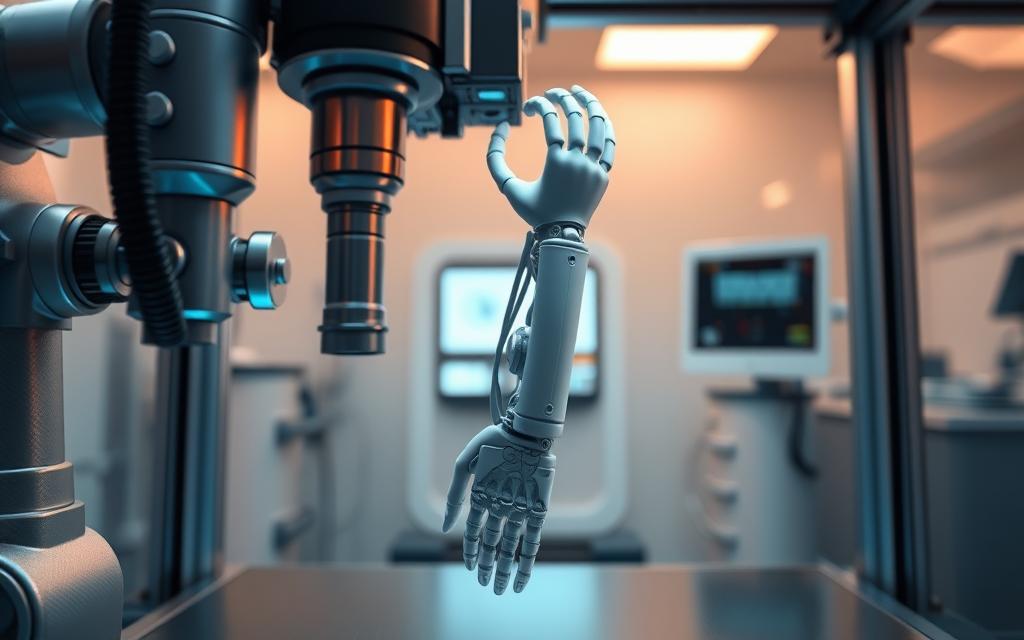
3D printing fixes these problems by allowing for custom designs. Each prosthetic is made to fit perfectly, ensuring comfort and mobility.
It’s also much cheaper than old methods. This makes advanced prosthetics available to more people around the world.
Another benefit is how fast 3D printing works. What used to take weeks or months now takes just days. This cuts down waiting times for patients.
The Expansion of Telemedicine During Health Crises
Telemedicine has also seen huge growth, thanks to healthcare technology. Digital health platforms became key during global health crises.
The COVID-19 pandemic showed how tech could keep healthcare going while keeping people safe. Patients could talk to doctors from home, reducing infection risks.
This change was part of a bigger shift during lockdowns. Parents worked from home, kids learned online, and patients got their healthcare digitally too.
How Digital Platforms Changed Patient Care
Telemedicine has made patient care better in many ways:
- It’s easier for people in rural areas or with mobility issues
- It saves time and money by cutting down on travel
- Appointments are often available sooner
- It keeps care going with digital records
The internet and digital tools have made healthcare possible even when we’re stuck at home. This is a major leap forward in medical technology.
| Aspect | Traditional Healthcare | Technology-Enhanced Healthcare |
|---|---|---|
| Appointment Waiting Time | Days or weeks | Often same-day availability |
| Cost of Prosthetic Limb | Thousands of pounds | Hundreds of pounds |
| Geographical Accessibility | Limited to physical locations | Global reach through digital platforms |
| Customisation Options | Limited standard sizes | Fully personalised solutions |
These changes in healthcare technology are changing medicine worldwide. From 3D-printed devices to telemedicine, tech is making healthcare better, more affordable, and more personal for all.
Cybersecurity: Shielding the Digital World
In today’s world, keeping our digital lives safe is key. With more online threats, like identity theft, governments are stepping up. They’re making new laws to protect us all.

The Importance of Robust Password Practices
Good passwords are our first defence against hackers. Yet, many use simple passwords or the same one everywhere. This leaves us open to attacks.
Common vulnerabilities and protective measures
Some common password mistakes include:
- Using personal info like birthdays or pet names
- Choosing short, easy-to-guess passwords
- Using the same password for all accounts
- Writing passwords down where they can be found
To stay safe online, try these tips:
- Use multi-factor authentication when you can
- Get a password manager for complex, unique passwords
- Change your passwords often, after any security alerts
- Don’t use the same password for all your accounts
These tips show why keeping your passwords strong is so important today.
Encryption’s Role in Securing Daily Communications
Encryption is like a secret code for our online chats. It makes data unreadable until it reaches the right person.
From messaging apps to financial transactions
Encryption keeps many parts of our lives safe:
- Private messages on apps like WhatsApp and Signal
- Secure emails through ProtonMail
- Safe online banking and credit card use
- Secure website connections (HTTPS)
As hackers get smarter, so does encryption. It keeps our messages safe, even from service providers. This gives us peace of mind online.
Knowing about these security steps helps us stay safe online. From strong passwords to encryption, these tools protect us all in the digital world.
Future Tech: Emerging Trends and Possibilities
Looking ahead, two areas stand out for their big changes and big questions. These new fields could change everything but also bring big challenges.
Quantum Computing: Promises and Practical Challenges
Quantum computing is a big leap from old computers. It uses qubits, which can be in many states at once.
Understanding qubits and quantum supremacy
Qubits work in ways old computers can’t. They could solve big problems like finding new medicines or understanding the weather.
Quantum supremacy means quantum computers are better at some tasks than old computers. But, making them work in real life is hard because of:
- They’re very sensitive to their surroundings
- They make lots of mistakes that need fixing
- They need to be very cold
Today, quantum computers are just starting. They might be used in stores in a few years. Big tech companies are spending a lot to make them better.
Biotech Enhancements: Ethical Dilemmas
Biotech is changing how we can improve ourselves and our genes. These changes could help a lot but also raise big questions.
The frontier of human augmentation and gene editing
Tools like CRISPR-Cas9 can change our DNA. This could get rid of some diseases. At the same time, new tech is making us stronger and smarter.
These advances bring up big questions like:
- Who gets to use these new tools?
- What might happen in the long run?
- What does it mean to be human?
Technology is a problem when we forget about our values and ethics.
Biotech is moving fast, but we’re not always ready. We need to think carefully about how to use these new tools.
Quantum computing and biotech are amazing achievements. But, we must think about their impact on society and our values.
Conclusion
Our look into surprising tech truths shows a world of human achievement. We’ve seen Ada Lovelace’s early work and the promise of quantum computing. These examples highlight our ability to innovate.
Technology itself has no moral value – it’s just a tool shaped by us. Its worth comes from how we use it, not just making it. This view is key to understanding technology’s role in our lives.
We have a big responsibility with technology. We decide if new tech helps us or hurts us. Issues like e-waste, device security, and ethics in biotech need our careful thought.
The biggest tech leap might be learning to use our creations wisely. This journey through tech facts teaches us that technology both reflects and shapes us.
FAQ
Who was the first computer programmer?
Ada Lovelace is known as the world’s first computer programmer. She worked on Charles Babbage’s Analytical Engine. Her work showed she understood computing’s future well.
Why is the QWERTY keyboard laid out as it is?
The QWERTY layout was made to stop typewriters from jamming. It puts common letter pairs far apart. This design has stuck with us ever after.
How powerful is a modern smartphone compared to historical computers?
Today’s smartphones are much more powerful than the computers used in NASA’s Apollo missions. This shows how far we’ve come in making things smaller and more efficient.
What is the meaning behind the USB icon?
The USB icon looks like Neptune’s spear. It symbolises power and connection. This mythological image shows the standard’s goal of creating a universal and strong connection for devices.
How much of internet traffic is automated?
More than half of the internet’s traffic is from bots and automated systems. They do things like index content for search engines and monitor websites.
Why are default passwords a security risk?
Default passwords are weak and well-known. This makes devices easy to hack. Changing them is key to keeping your data safe.
Can AI perfectly mimic human voices?
AI can make voices sound very real. But it’s not perfect. It often lacks the realness and emotion of human speech.
Why does AI struggle with common sense?
AI is good at specific tasks but not at general intelligence. It doesn’t understand the world like humans do. This makes it hard for AI to use common sense.
Are video games used for professional training?
Yes, games are used to train professionals. They help pilots, surgeons, and soldiers learn in a safe way. This helps them make better decisions.
What psychological tactics are used in in-game purchases?
Games use psychology to make you spend more. They use things like variable rewards and scarcity. This makes you want to keep playing and spending.
How do satellites help monitor climate change?
Satellites track changes in the atmosphere, ice, forests, and oceans. This data is key for understanding climate change. It helps us make better policies.
What risks does space debris pose?
Space debris is a big problem. It can crash into working satellites and hurt astronauts. It’s a threat to our use of space.
How efficient have solar panels become?
Solar panels are now very efficient, turning over 22% of sunlight into electricity. Scientists are working to make them even better.
What is the impact of electronic waste?
Electronic waste harms the environment and our health. It contains toxic materials. Recycling it is hard but very important.
How is 3D printing used in prosthetics?
3D printing makes custom prosthetics. They are affordable and fit each person perfectly. This technology changes lives by making healthcare more personal.
How did telemedicine expand during the COVID-19 pandemic?
Telemedicine grew a lot during the pandemic. It lets people see doctors remotely. This kept healthcare going while keeping people safe.
Why are strong passwords and multi-factor authentication important?
Strong passwords and multi-factor authentication protect your data. They add extra security. This keeps your information safe from hackers.
How does encryption protect digital communications?
Encryption makes data safe by coding it. Only those with the right key can read it. It’s key for keeping messages and money safe online.
What is quantum computing’s potential?
Quantum computing can solve problems that regular computers can’t. It’s being explored for things like finding new medicines and breaking codes. But it’s a tough technology to use.
What ethical issues arise from biotechnology like gene editing?
Biotechnology, like CRISPR, raises big questions. It involves things like editing genes and changing humans. We need to talk about these issues and make rules to handle them.